Observational Skills in Senior Living

Observational Skills in Senior Living

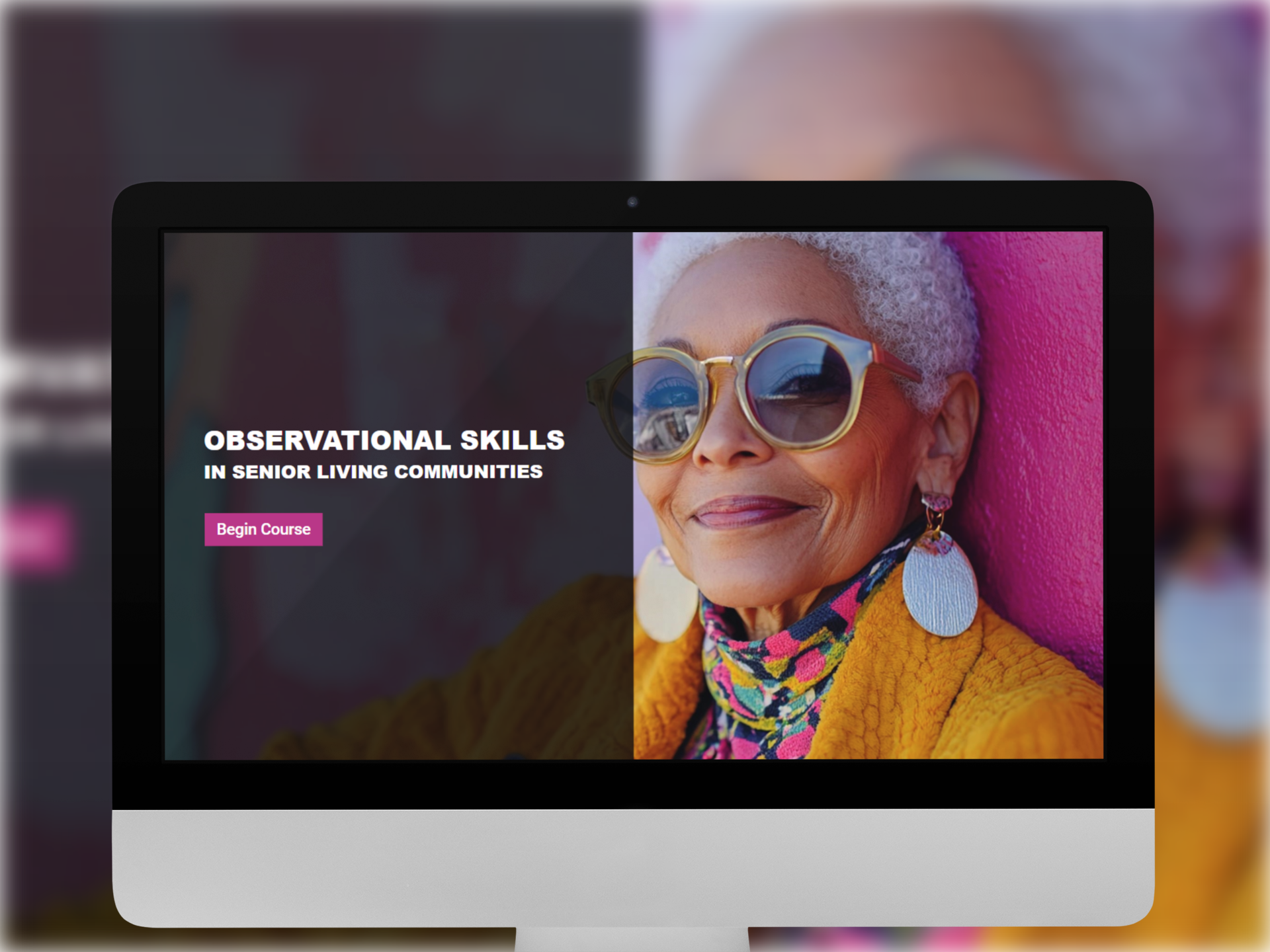
An interactive course built for senior living teams that turns everyday moments into meaningful observations. Designed to build confidence, protect dignity, and support early reporting across non-clinical care roles.

Client
Tools
Storyline, Eleven Labs
year
2024

Behind the scenes.

The problem:

In senior living communities, some of the most important indicators of resident well-being appear outside formal clinical encounters.

Front desk staff, dining teams, housekeeping, maintenance, and activities professionals spend more time in informal proximity to residents than anyone else. Yet these team members are often unsure what matters, what’s appropriate to notice, and when to speak up—particularly when they are not in clinical roles.

This course needed to:

  • Build confidence without overstepping scope
  • Encourage early reporting without diagnosis
  • Reinforce dignity, privacy, and care as shared responsibilities

All within the constraints of a pre-approved instructional script intended for broad distribution across senior living organizations.

Task analysis:

This was not a traditional instructional design engagement.

Content direction, learning objectives, and narrative voice were provided in advance as part of a healthcare training package designed for resale. My role was to translate an approved script into a learning experience that felt human, respectful, and usable for a diverse, non-clinical workforce.

Key considerations:

  • Learners span multiple roles, education levels, and levels of confidence
  • The emotional tone needed to be supportive, not corrective
  • Observation had to be framed as care, not surveillance
  • Clear boundaries between observing, reporting, and diagnosing were essential

Process & approach:

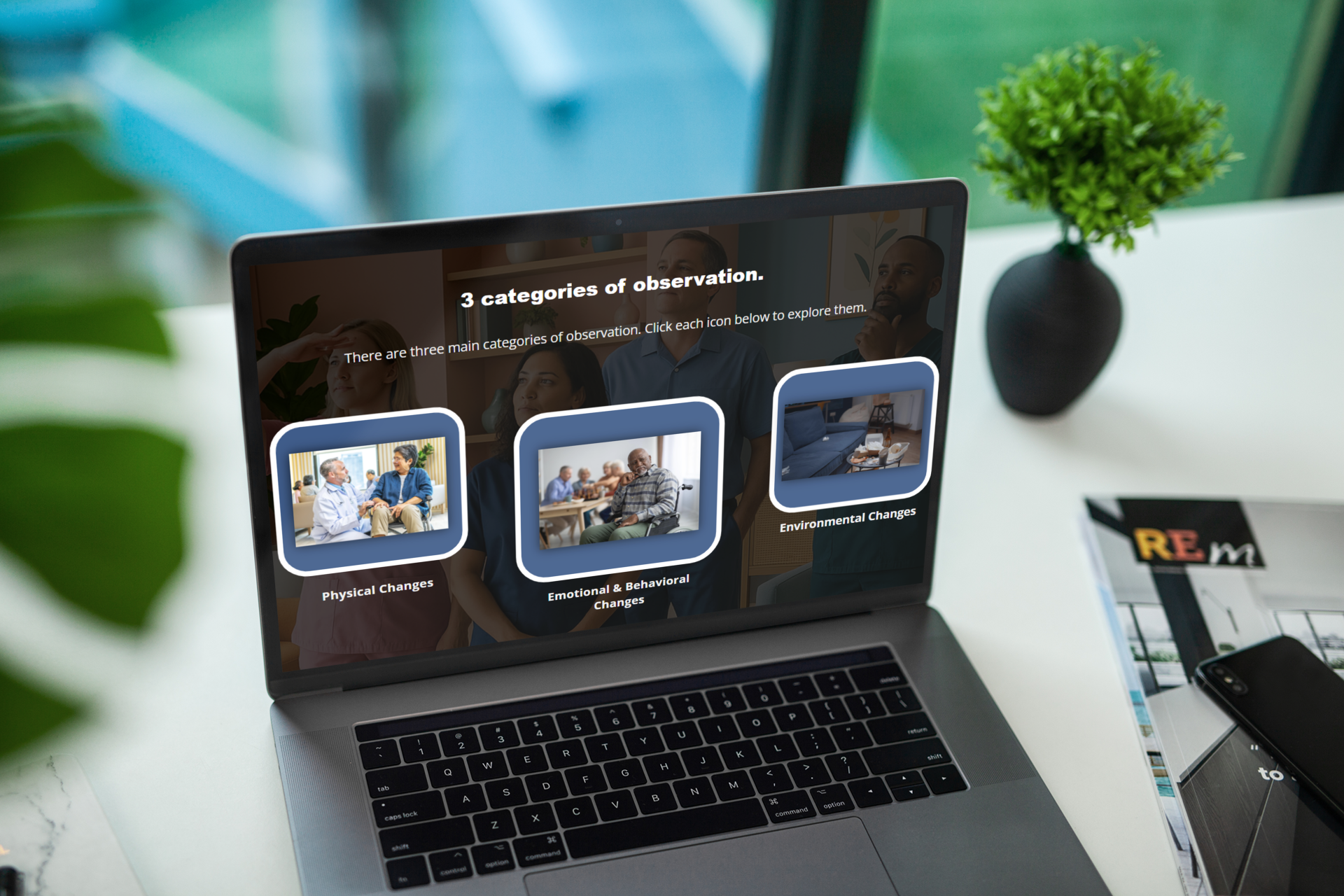
Given the length and density of the approved script, the primary design challenge was cognitive load management. I relied on several of Mayer’s Multimedia Principles to shape how the content was experienced:

  • Segmenting Principle
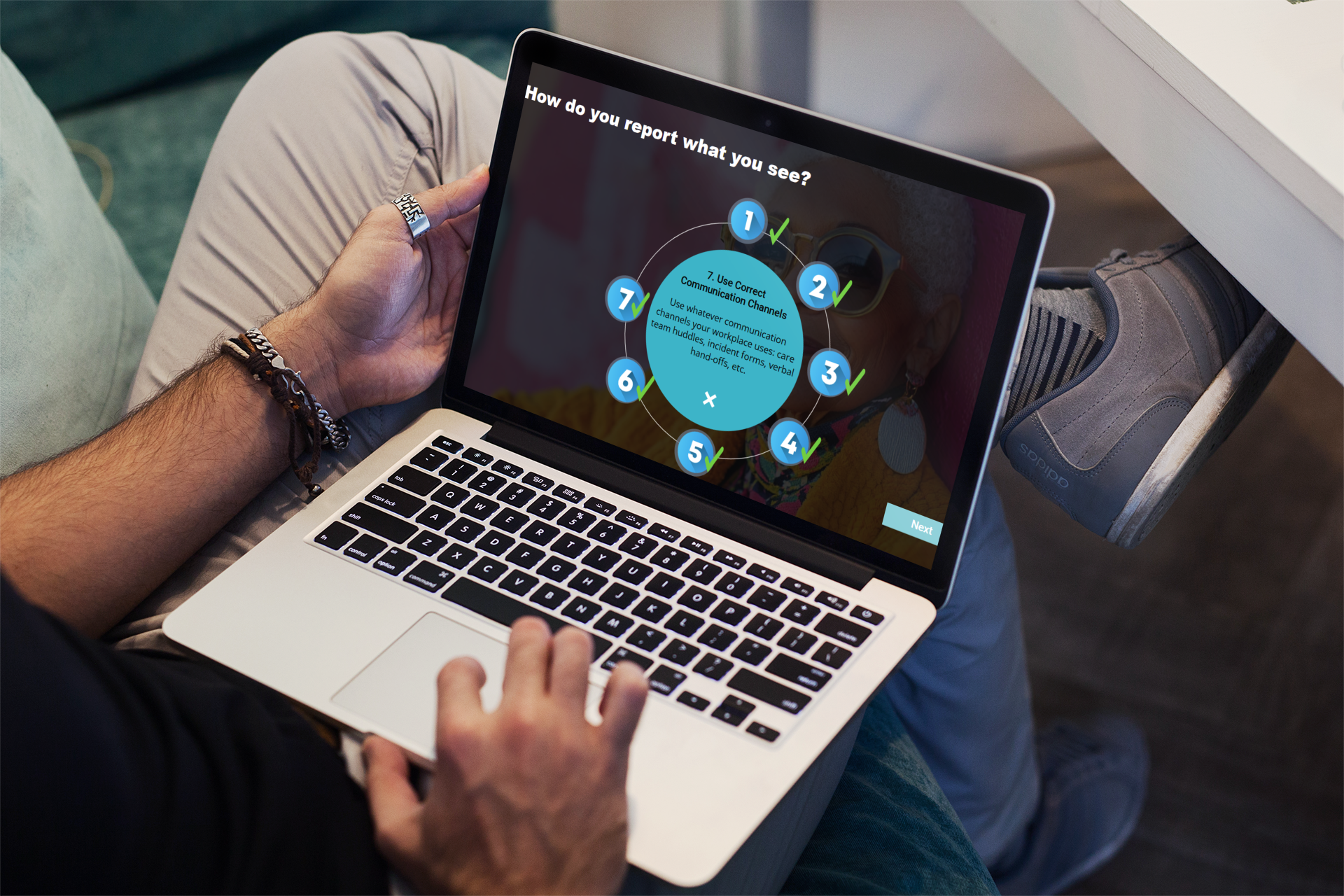
    Long narrative sections were broken into short, purposeful segments, allowing learners to control pacing and process ideas in manageable chunks.
  • Signaling Principle
    Visual and textual cues were used to highlight key ideas—such as what to observe, what to report, and what not to do—so learners could quickly identify what mattered most.
  • Coherence Principle
    Non-essential content, visual noise, and decorative elements were intentionally avoided to keep attention focused on observation, judgment, and care-centered behaviors.
  • Modality Principle
    Where appropriate, spoken narration was paired with minimal on-screen text to reduce redundancy and support learners with varied reading comfort levels.
  • Personalization Principle
    The script’s conversational tone was preserved and reinforced, helping the course feel supportive and human rather than instructional or corrective.

Together, these principles helped ensure the course felt calm, respectful, and cognitively accessible for a non-clinical healthcare workforce.

Challenges & solutions:

This project was delivered within a defined scope and deadline, with limited flexibility around content. To meet timeline expectations without sacrificing quality, I used a focused, production-oriented workflow:

  • Established a clear build plan upfront, mapping script sections directly to Storyline scenes to reduce rework.
  • Used rapid prototyping for early screens to confirm pacing, tone, and interaction style before full production.
  • Applied consistent layout and interaction patterns to streamline development and maintain visual continuity.
  • Managed work in short, defined build cycles, allowing progress to remain predictable and deadline-driven.
  • Reserved dedicated time for final QA and polish, ensuring accuracy, usability, and tone consistency prior to delivery.

This approach allowed the course to move efficiently from script to finished build while maintaining design integrity and care-centered intent.
No items found.

Other projects.

Let's work together!

Need your team to master a new skill or sharpen an existing one? Let's identify what they need and design a solution that will guide them to new heights.

Thank you! Your submission has been received!
Oops! Something went wrong while submitting the form.