
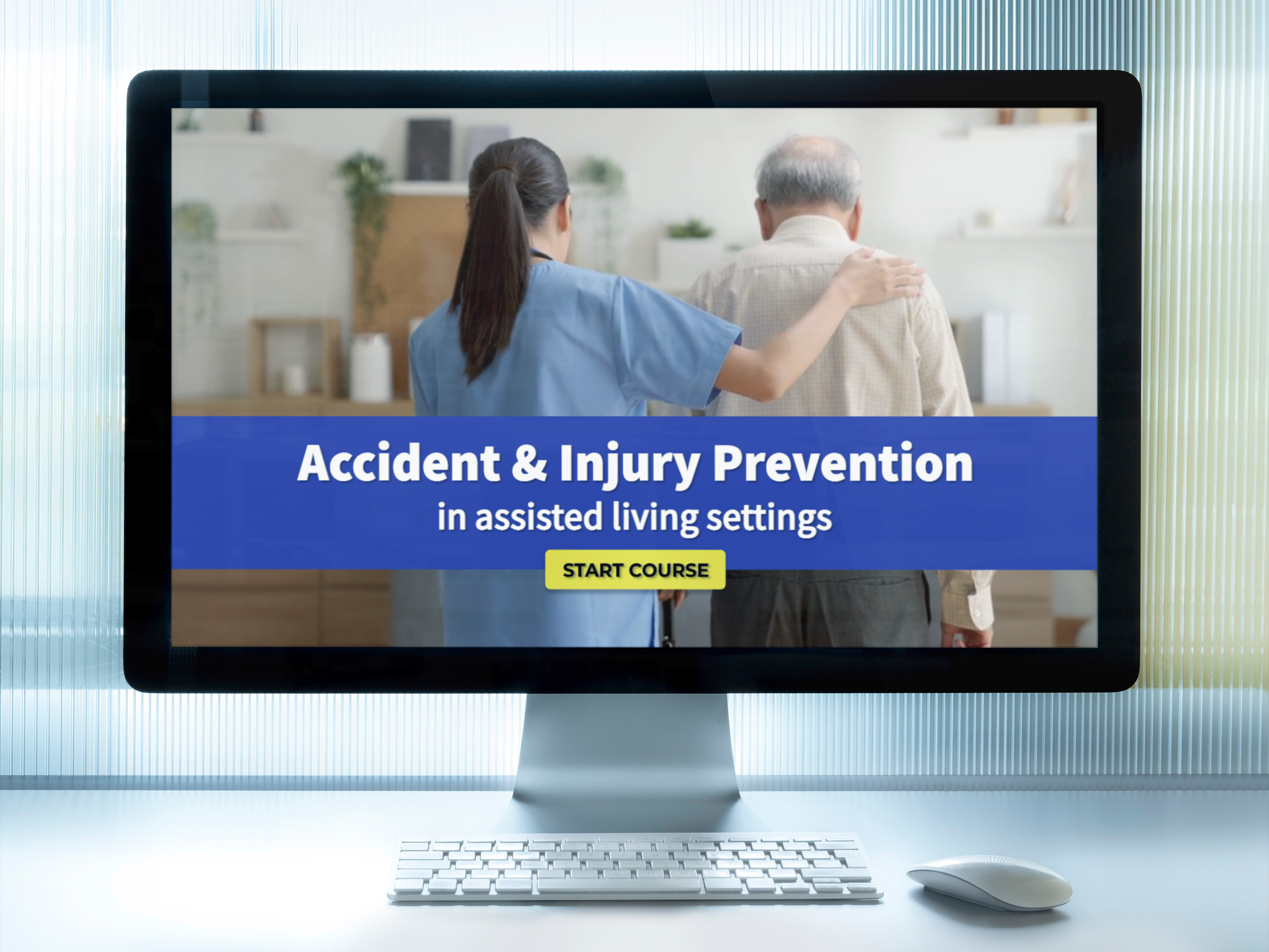
An onboarding training for an assisted living facility, emphasizing patient and coworker safety.

Falls, strains, and safety incidents often emerge from a combination of factors: medication side effects, reduced mobility, environmental hazards, inconsistent lifting practices, or breakdowns in communication. While clinical teams assess and manage risk formally, non-clinical staff are often the first to encounter conditions that increase the likelihood of injury.
This course needed to:
All within the constraints of a fixed, pre-approved instructional script intended for distribution across assisted living organizations.
This engagement focused on learning experience implementation within a defined healthcare training package.
Content scope, learning objectives, and narrative direction were provided in advance. My responsibility was to design and build an interactive course that could be understood, retained, and applied by a diverse assisted living workforce.
Key learner considerations:
The learning needed to feel:
This project was approached as a learning experience build within defined healthcare and client constraints, balancing cognitive clarity, safety-critical content, and a firm production timeline. The instructional script and objectives were provided in advance, which shifted the focus from content authorship to experience design—specifically, how dense safety guidance would be perceived, processed, and retained by a diverse assisted living workforce. To manage cognitive load, the course structure intentionally applied Mayer’s Multimedia Principles, particularly segmenting, signaling, and coherence, breaking complex topics such as fall risk, environmental modification, and safe resident handling into focused, navigable sections with clear visual hierarchy.
Where narration was used, the client required on-screen text to remain visible alongside spoken dialogue. While this runs counter to Mayer’s modality and redundancy principles, the constraint was addressed thoughtfully by minimizing extraneous language, tightly aligning text with narration, and pacing screens to reduce overload. This ensured that required redundancy supported accessibility and reinforcement rather than distraction. The script’s conversational tone was preserved in alignment with the personalization principle, helping safety practices feel supportive and care-centered rather than procedural or punitive.
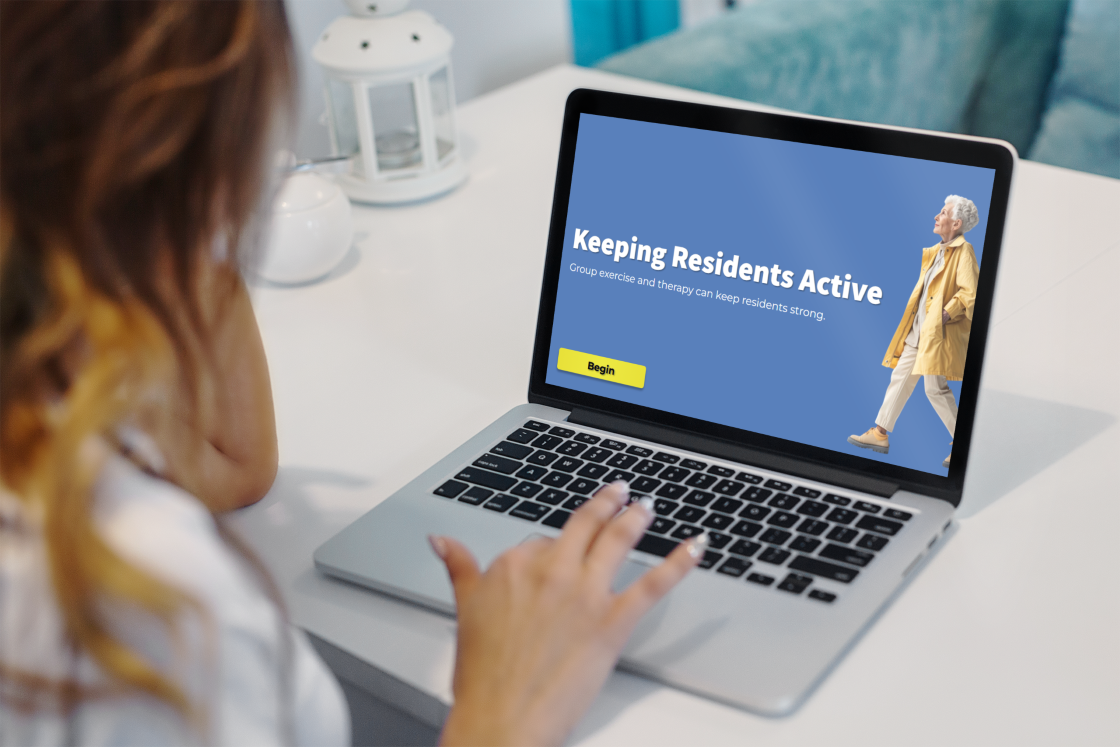
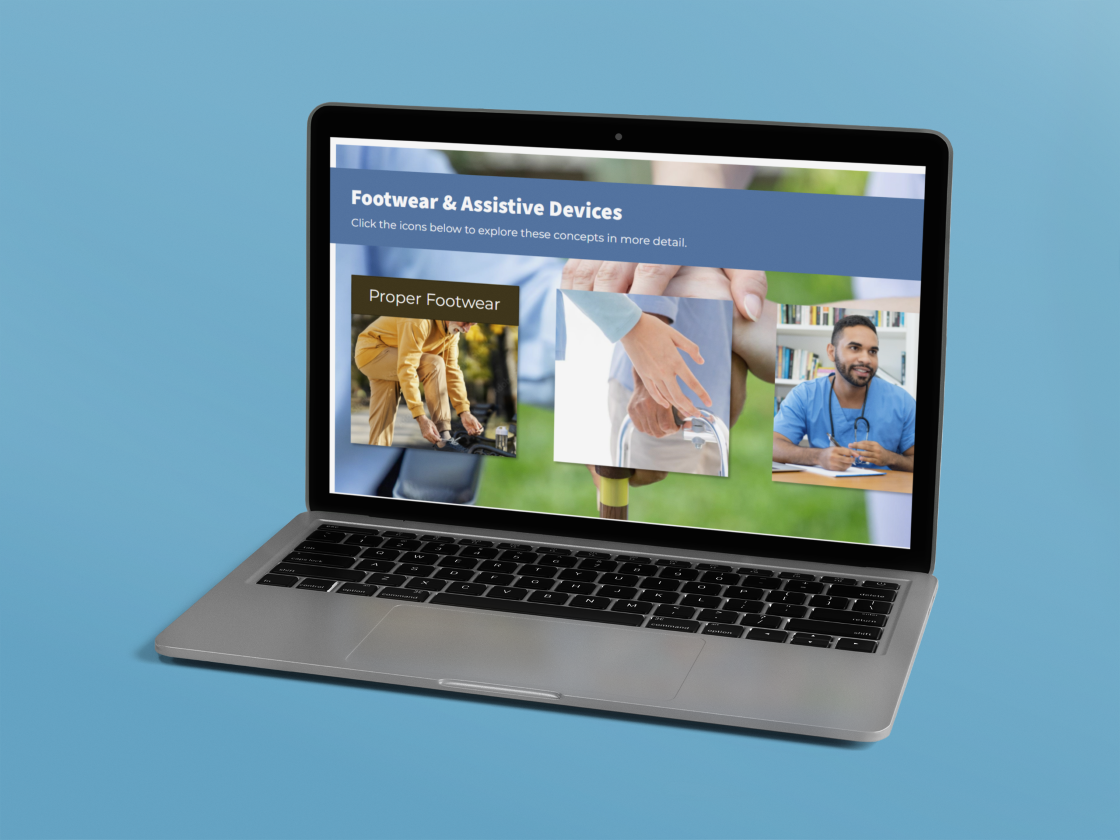
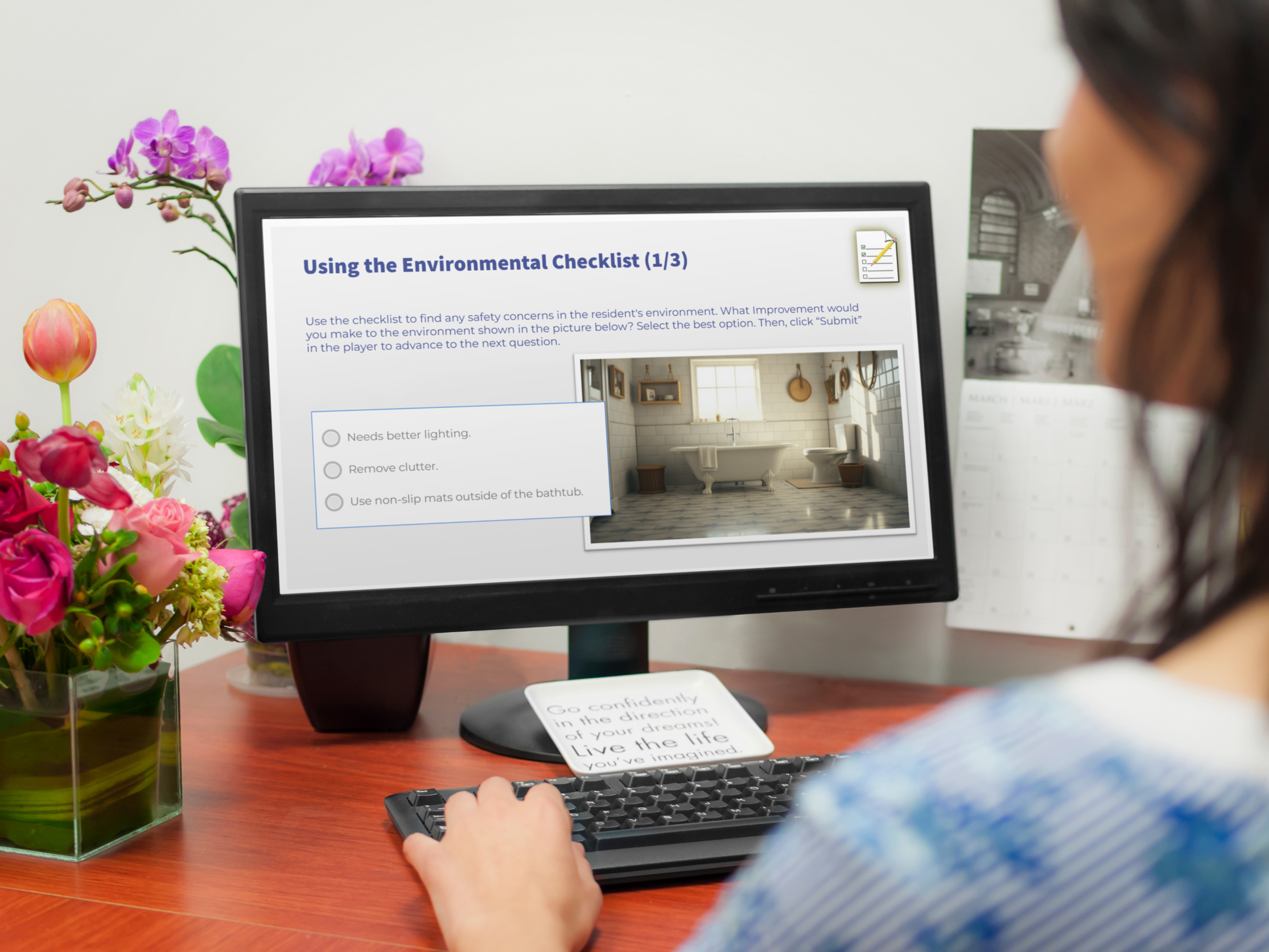
From a visual and interaction standpoint, a consistent blue and yellow color system was used throughout the course to establish a clear, recognizable identity across modules while supporting contrast and readability. Reusable layouts, checklist-based interactions, and scenario-driven screens created rhythm and predictability, allowing learners to focus on judgment and application rather than interface learning. Environment-based visuals and step-by-step handling sequences reinforced situational awareness without overwhelming detail.
Project delivery was managed through a structured, production-first workflow designed to meet deadline expectations without sacrificing quality. Script sections were mapped directly to Storyline scenes early, representative screens were built and validated upfront, and consistent interaction patterns were established to streamline development. Work progressed in defined build cycles, with dedicated time reserved for QA, visual consistency checks, and final polish. This approach allowed the course to move efficiently from approved script to finished learning experience while maintaining clarity, tone, and respect for both resident dignity and staff safety.
The course covered multiple domains—falls, ergonomics, lifting, emergency response, and culture of safety.
Design response
Clear section framing and visual hierarchy were used to help learners understand how each topic fit into a larger prevention system.
Improper lifting or environmental oversight can cause serious injury.
Design response
Step-by-step visuals, consistent phrasing, and repetition of safe practices reinforced muscle memory and situational awareness without overwhelming learners.
Risk mitigation can unintentionally feel restrictive or paternalistic.
Design response
Language consistently acknowledged resident autonomy and the importance of balancing safety with a home-like environment.
Need your team to master a new skill or sharpen an existing one? Let's identify what they need and design a solution that will guide them to new heights.

.png)
.png)

